
pito-footer
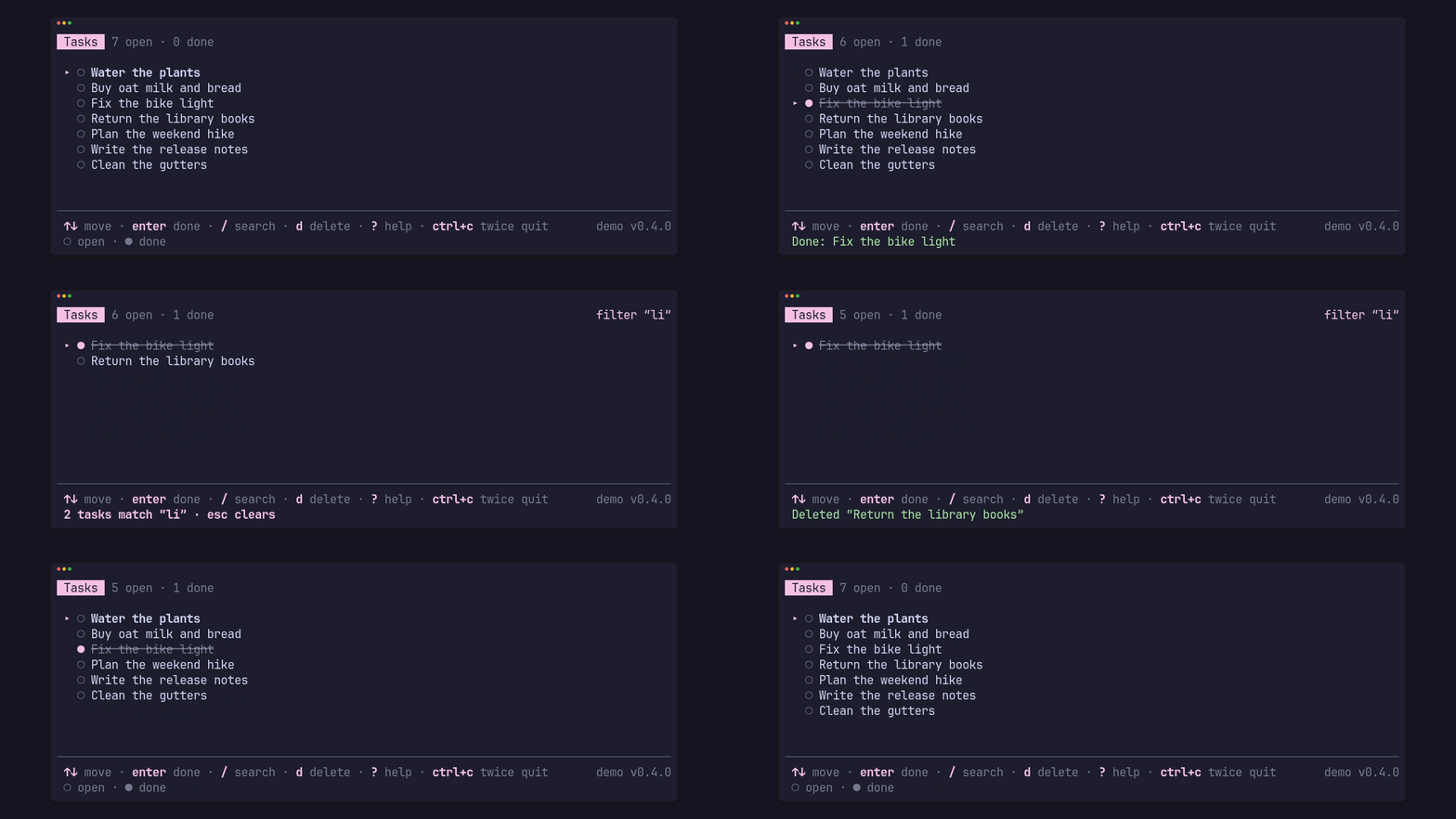
pito-footer is the bottom of a PITO MD terminal app, as a small ratatui 0.30 crate: key hints that fit the width, a notice line, a y/n confirm, a one-line input, a quit guard and the app’s version. The look is in the style of HEY’s terminal UI. It has no app logic and no words of its own: the app passes in every hint, every word, every key and every style, so any language works.
- 8.4 µs to draw a row of twelve hints with a notice at 150 columns, and 38.5 µs for a frame that draws every widget the crate has: 0.23% of a 60 fps frame.
- Zero allocations while drawing: a counting allocator in the tests holds it.
- 3 dependencies: ratatui without its default features, unicode-width and
unicode-segmentation (crossterm 0.29 only with the
crosstermfeature). - 2,078 lines of Rust, rebuilt in 1.5 s after a change.
Works on Linux, Windows and macOS (CI-tested on all three).
Where to go next
Section titled “Where to go next”- Install and first use: the Cargo line and a first footer.
- Guides, one task a page:
- API reference: every type and method, from
cargo doc. - Changelog: every release, newest first.
Part of PITO MD
Section titled “Part of PITO MD”pito-footer is one of the terminal crates of PITO MD. pito-tui is the app shell that brings it together with pito-header at the top, pito-list for the rows and pito-hourglass while data loads. The clips are recorded with prec and made into GIFs with pconv, and the speed chart is drawn by pito-compare.
The code is MIT licensed. The PITO MD name and its logos are © Catalin Ilinca, all rights reserved, and are not covered by the MIT licence.