
Resolve a scene
Project::scene resolves a scene into a Scene: includes merged, prefabs placed as objects with their per-placement overrides, and every reference rewritten to the key of the entry it names. It is what an engine’s loader reads. It returns the scene with its warnings, or the errors that stop it from loading.
From the command line
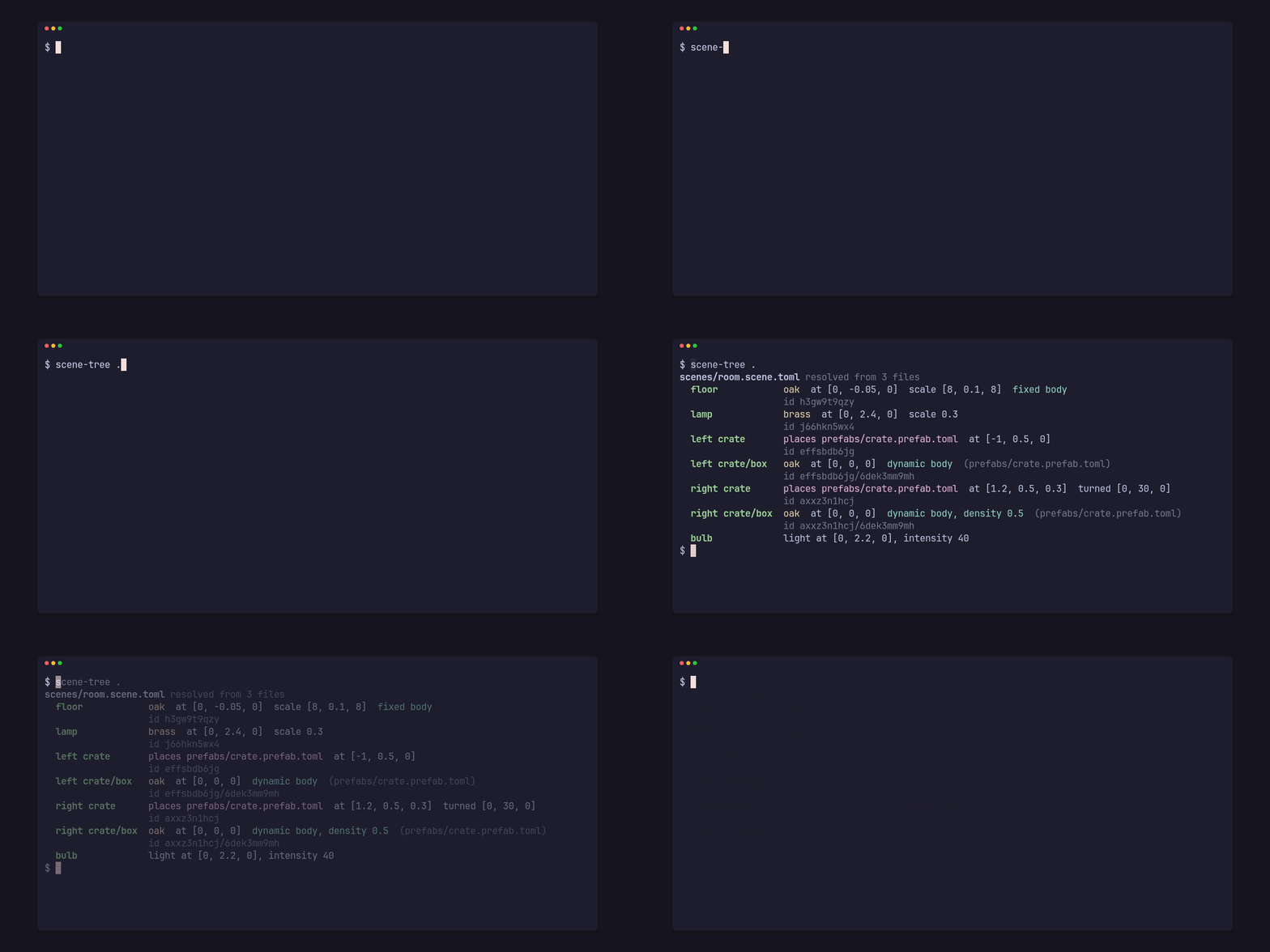
Section titled “From the command line”The scene-tree example prints a resolved scene. On the demo project:
cargo run --release --example scene-tree -- examples/demoscenes/room.scene.toml resolved from 3 files floor oak at [0, -0.05, 0] scale [8, 0.1, 8] fixed body id h3gw9t9qzy lamp brass at [0, 2.4, 0] scale 0.3 id j66hkn5wx4 left crate places prefabs/crate.prefab.toml at [-1, 0.5, 0] id effsbdb6jg left crate/box oak at [0, 0, 0] dynamic body (prefabs/crate.prefab.toml) id effsbdb6jg/6dek3mm9mh right crate places prefabs/crate.prefab.toml at [1.2, 0.5, 0.3] turned [0, 30, 0] id axxz3n1hcj right crate/box oak at [0, 0, 0] dynamic body, density 0.5 (prefabs/crate.prefab.toml) id axxz3n1hcj/6dek3mm9mh bulb light at [0, 2.2, 0], intensity 40A second argument names another scene file of the project.
Keys and ids of placed entries
Section titled “Keys and ids of placed entries”The crate prefab holds one object, box, with id 6dek3mm9mh. Each placement makes its own copy, keyed and identified by the placement: left crate/box with id effsbdb6jg/6dek3mm9mh, and right crate/box with id axxz3n1hcj/6dek3mm9mh. Two placements of one prefab never collide. The right crate’s [object.set] gave its box a density of 0.5; the left crate’s box keeps the prefab’s own.
A placed entry’s position is its own, relative to its placement: the at above is the box’s place in the prefab. The parent links say which placement holds it, and the loader composes the transforms.
From code
Section titled “From code”use std::path::Path;
use pfx_scene::Project;
fn main() { let project = Project::open(Path::new("examples/demo")).unwrap(); let scene = match project.scene(Path::new("scenes/room.scene.toml")) { Ok(scene) => scene, Err(errors) => { for error in errors { eprintln!("{error}"); } return; } }; for object in &scene.objects { println!("{} {:?} at {:?}", object.key, object.id, object.value.at); } for warning in &scene.warnings { println!("{warning}"); }}Each list of the scene (objects, meshes, materials, lights, sounds, rigs, tiles and the rest) holds Entry values: the resolved key, the id, the file it came from, and the typed value. Scene::object(key), Scene::mesh(key) and their like find one by key. The scene-wide sections (sun, sky, haze, camera, finish, trace, plates, physics) are Options, layers holds the project’s collision layers, and files lists every file the scene read.
To read one file as typed data without resolving it, Project::read returns a File (File::Project, File::Scene, File::Prefab, File::Materials, File::Proxies or File::Finish), plain serde structs, migrated in memory when the file is older.