
Check a project
Project::check checks every file of a project: each scene with everything it reads, each prefab on its own, and every include, prefab, reference, id and asset path. It returns a list of Diagnostics, empty when the project is clean.
From the command line
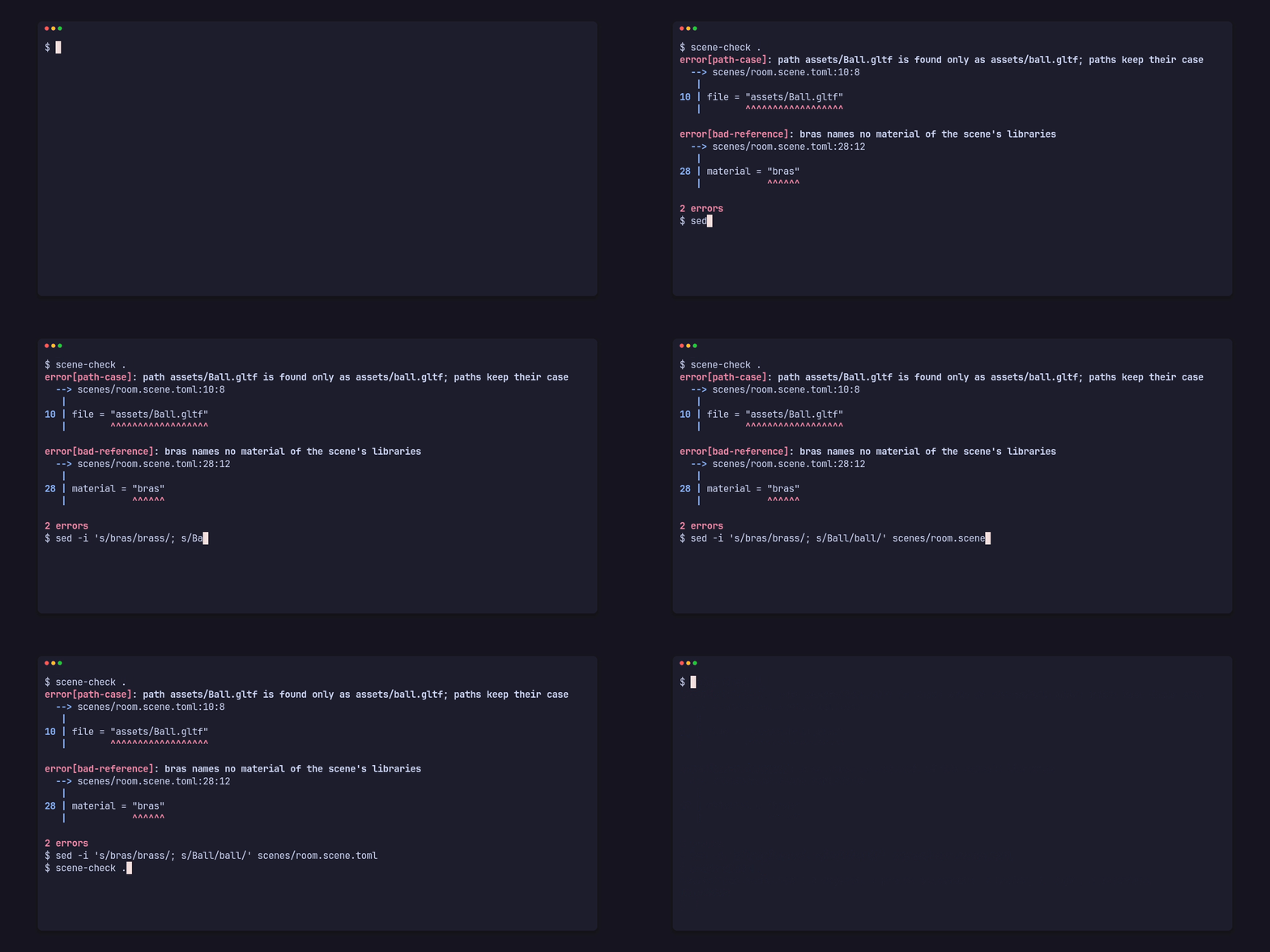
Section titled “From the command line”The scene-check example runs it on a folder. On a copy of the demo with two mistakes, a mesh path written assets/Ball.gltf and the lamp’s material written bras:
cargo run --release --example scene-check -- my-copyerror[path-case]: path assets/Ball.gltf is found only as assets/ball.gltf; paths keep their case --> scenes/room.scene.toml:10:8 |10 | file = "assets/Ball.gltf" | ^^^^^^^^^^^^^^^^^^
error[bad-reference]: bras names no material of the scene's libraries --> scenes/room.scene.toml:28:12 |28 | material = "bras" | ^^^^^^
2 errorsIt exits with 1 when it finds an error. With both fixed:
scenes/room.scene.toml: 6 objects, 2 prefab placements, 3 bodies, 1 light, 2 materialsno errorsThe case mistake would pass on Windows and macOS, whose disks usually ignore case, and fail on Linux; the checker refuses it on every system.
From code
Section titled “From code”use std::path::Path;
use pfx_scene::Project;
fn main() { let project = match Project::open(Path::new("my-game")) { Ok(project) => project, Err(diagnostic) => { eprintln!("{diagnostic}"); return; } }; let findings = project.check(); for d in &findings { println!("{}:{}:{} {} [{}] {}", d.file.display(), d.line, d.column, d.severity, d.code, d.message); } let errors = findings.iter().filter(|d| d.is_error()).count(); println!("{errors} errors");}Each Diagnostic has:
file, relative to the project root, andline,column,end_line,end_column: 1-based, columns counting characters, the end just past the span.severity:ErrororWarning. A warning, such asmissing-idorold-format, doesn’t stop a scene from loading.code: a stable string such asbad-reference,path-case,missing-key,bad-type,duplicate-idorinclude-cycle.pfx_scene::code::ALLlists every code, and the format says when each is given.key, the key the finding is about, andmessage, in plain words.related: other places involved, such as the first holder of a duplicate id, or each include of a cycle.
Printing a Diagnostic with {} gives the scene-check style above, without the source lines.
What Project::open reads
Section titled “What Project::open reads”Project::open finds the files under the root by their names. It skips the root’s target and tmp folders, the paths [project] ignore lists, names that start with a dot, and folders that hold their own project.toml. A file a scene names inside a skipped folder is still read and checked with that scene.